
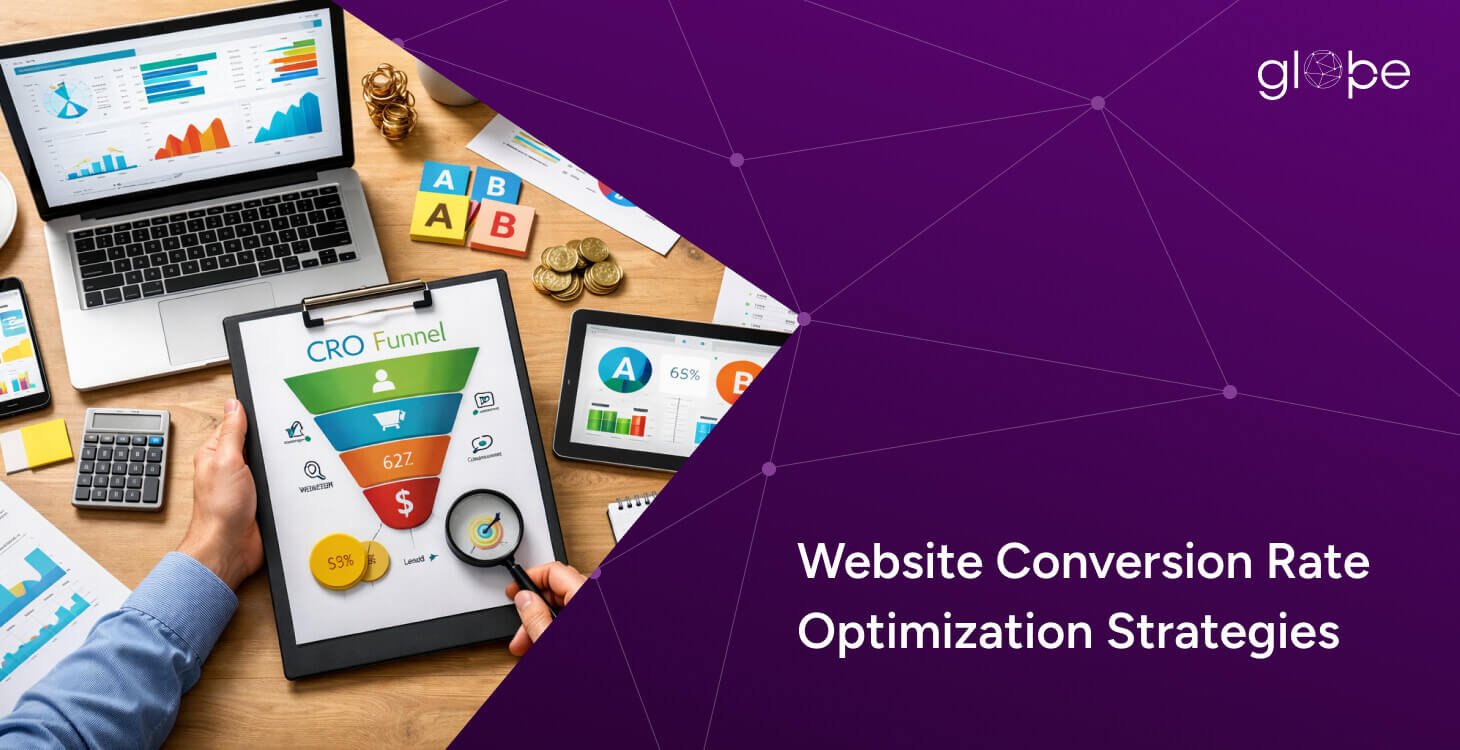
Driving traffic to your website is no longer the biggest challenge for most businesses. The real problem begins after visitors arrive. Many business owners invest heavily in SEO, ads, and social media, yet struggle to turn that traffic into leads, inquiries, or sales. When a website attracts visitors but fails to convert them, it quietly drains marketing budgets and growth opportunities.
This is where Website Conversion Rate Optimization becomes critical. Conversion Rate Optimization (CRO) focuses on improving how your website performs for the visitors you already have. Instead of chasing more traffic, CRO helps you generate more value from existing users by removing friction, improving user experience, and guiding visitors toward clear actions.
In this guide, we’ll break down practical website conversion rate optimization strategies that business owners can actually apply. No technical jargon, no theory-heavy advice just proven methods that help turn underperforming websites into consistent lead and revenue generators.
What Is Website Conversion Rate Optimization?
Website Conversion Rate Optimization is a structured approach to improving how visitors engage with your website and what they do next. Instead of relying on assumptions, CRO focuses on understanding real user behavior—how people scroll, where they hesitate, what they ignore, and what ultimately convinces them to take action.
At its core, CRO combines user experience improvements with data-backed decision-making. This includes refining headlines and call-to-action buttons, reducing page load times, simplifying navigation paths, and removing unnecessary distractions that prevent users from converting. Even small changes, when done strategically, can have a noticeable impact on lead generation and sales.
Effective conversion optimization also takes into account how users access your website. Mobile usability, checkout or form friction, and trust signals such as testimonials or reviews all play a crucial role in decision-making. By analyzing tools like heatmaps, session recordings, and A/B tests, businesses can continuously fine-tune their website experience to align with user intent and business goals—without increasing advertising spend.
Why Businesses Struggle With Website Conversions
Many businesses assume that low website conversions are a traffic problem. In reality, most conversion issues stem from how the website functions, communicates, and guides users. Even well-designed websites can fail to convert if they don’t align with visitor expectations and behavior.
One of the most common issues is unclear messaging. When visitors land on a website and can’t immediately understand what the business offers, who it’s for, or why they should take action, they leave. Businesses often focus too much on features instead of clearly communicating value, which creates confusion and hesitation.
Another major factor is poor user experience. Complicated navigation, cluttered layouts, or pages that overwhelm users with too much information can break the conversion flow. If visitors have to think too hard about where to click next, they are unlikely to convert. A smooth, intuitive journey is essential for keeping users engaged.
Website performance also plays a critical role in conversion success. Slow-loading pages, unoptimized images, or heavy scripts frustrate users, especially on mobile devices where patience is limited. Even a delay of a few seconds can significantly increase bounce rates and reduce the likelihood of conversions. This is why website speed is not just a technical concern but a direct business factor, as explained in our detailed guide on WordPress speed optimization and its impact on conversions, where performance improvements are closely tied to user engagement and conversion outcomes.
Trust is another overlooked barrier. Websites that lack testimonials, reviews, security indicators, or real business credibility often struggle to convince users to submit forms or make purchases. Without trust signals, visitors hesitate to share their information or commit to a transaction.
Finally, many businesses operate without meaningful data insights. They make changes based on assumptions rather than understanding how users actually interact with their website. Without analytics, heatmaps, or conversion tracking, it becomes difficult to identify what’s working and what’s preventing users from converting.
Proven Website Conversion Rate Optimization Strategies
Improving website conversion rates doesn’t require guesswork or dramatic redesigns. The most effective conversion rate optimization strategies focus on reducing friction, improving clarity, and guiding users toward a single, clear action. Below are proven CRO strategies that consistently help businesses turn visitors into leads and customers.
Improve Website Speed and Performance
Website speed has a direct impact on conversions. When pages take too long to load, users lose patience and leave before engaging with your content. This is especially true for mobile users, who expect fast and responsive experiences.
Optimizing images, reducing unnecessary scripts, and improving server performance can significantly reduce load times. Faster websites keep users engaged longer, reduce bounce rates, and increase the chances of form submissions, inquiries, or purchases.
Optimize Website User Experience (UX)
A website should guide users naturally toward conversion without making them think. Poor navigation, cluttered layouts, or confusing page structures create friction that prevents users from taking action.
Conversion-focused UX optimization includes:
- Clear navigation paths
- Logical page hierarchy
- Easy-to-find contact or action buttons
- Mobile-friendly layouts
When users can quickly understand where to go and what to do next, conversions increase naturally.
Create Clear and Action-Oriented Calls-to-Action (CTAs)
One of the most common CRO mistakes is weak or unclear calls-to-action. Buttons like “Submit” or “Click Here” don’t tell users what they’ll get in return.
High-converting CTAs clearly communicate value and intent. Whether it’s “Get a Free Quote,” “Request a Demo,” or “Talk to an Expert,” your CTA should stand out visually and guide users toward the next step without hesitation.
Optimize Landing Pages for a Single Goal
Landing pages are often responsible for the majority of website conversions, yet many businesses overload them with distractions. Multiple CTAs, unnecessary links, or excessive content dilute the user’s focus.
A conversion-optimized landing page:
- Has one clear objective
- Communicates value above the fold
- Removes navigation distractions
- Uses concise, benefit-driven messaging
The simpler the decision, the higher the conversion rate.
Build Trust Using Social Proof and Credibility Signals
Visitors are unlikely to convert if they don’t trust your business. Even if your service is excellent, a lack of credibility signals can hold users back.
Adding testimonials, client logos, reviews, certifications, and security indicators reassures visitors that they’re making a safe decision. Trust-building elements are especially important for service-based businesses that rely on inquiries and lead forms.
Use Data and Testing to Improve Conversion Rates
Successful CRO is not based on assumptions—it’s driven by data. Tools like heatmaps, session recordings, and A/B testing help businesses understand how users actually interact with their website.
By testing headlines, layouts, CTAs, and content placement, businesses can continuously refine their website experience. Over time, these incremental improvements lead to measurable growth in leads and revenue without increasing marketing spend.
Conversion Rate Optimization Mistakes Businesses Should Avoid
While many businesses invest time and money into improving their website, conversion rate optimization often fails due to avoidable mistakes. Understanding these common errors can save businesses from wasted efforts and disappointing results.
One of the biggest mistakes is making changes without data. Businesses often redesign pages or tweak content based on personal opinions rather than actual user behavior. Without insights from analytics, heatmaps, or conversion tracking, it’s impossible to know whether changes are helping or hurting performance.
Another common issue is trying to optimize everything at once. CRO works best when changes are tested in a structured, step-by-step manner. Making multiple updates simultaneously makes it difficult to identify which improvement impacted conversion rates, leading to unclear results and missed opportunities.
Many businesses also focus too heavily on design while ignoring usability. A visually attractive website doesn’t always translate into better conversions. If users struggle to find information, navigate pages, or complete actions, conversions will suffer regardless of how modern the site looks.
Ignoring mobile users is another critical mistake. A significant portion of website traffic comes from mobile devices, yet many websites are still optimized primarily for desktop. Poor mobile experiences, slow load times, or difficult-to-use forms drastically reduce conversion potential.
Finally, businesses often treat conversion rate optimization as a one-time project. CRO is an ongoing process that requires continuous testing, refinement, and adaptation to user behavior. Websites that remain static over time tend to lose effectiveness as user expectations and market conditions evolve.
How Professional CRO Services Help Businesses Scale Faster
For many businesses, improving website conversions internally can be challenging. Limited time, lack of specialized expertise, and incomplete data often lead to slow progress or inconsistent results. This is where professional Conversion Rate Optimization (CRO) services make a measurable difference.
Professional CRO services bring a strategic, data-driven approach to website optimization. Instead of making isolated changes, experts analyze user behavior across the entire website from landing pages and navigation to forms and checkout flows. This allows businesses to identify exactly where visitors drop off and what prevents them from converting.
Another major advantage is structured testing and validation. CRO specialists run controlled A/B tests to validate improvements before rolling them out across the site. This removes guesswork and ensures every optimization decision is backed by real performance data, reducing risk while increasing returns.
Professional CRO teams also focus on scalability and long-term growth. As traffic increases through SEO, paid ads, or campaigns, optimized conversion funnels ensure that higher traffic translates into higher revenue not higher bounce rates. This makes CRO one of the most cost-effective growth strategies for businesses looking to scale efficiently.
Most importantly, outsourcing CRO allows business owners to focus on core operations while optimization experts continuously refine website performance. Instead of one-time fixes, professional CRO services provide ongoing improvements that adapt to changing user behavior and market trends.
How Glopbe Helps Businesses Improve Website Conversion Rates
At Glopbe, we approach website conversion rate optimization as a business growth strategy not just a set of design tweaks. Our focus is on understanding your business goals, your audience behavior, and the real obstacles preventing visitors from converting into leads or customers.
We start with a conversion-focused website audit that analyzes user journeys, page performance, messaging clarity, and technical bottlenecks. This allows us to identify exactly where potential customers drop off and what changes will have the highest impact on conversions.
Our CRO process combines UX/UI optimization, performance improvements, and data-driven testing. From refining landing pages and calls-to-action to improving mobile usability and page speed, every optimization is guided by real user behavior and measurable outcomes. We don’t rely on assumptions—we rely on insights.
What sets Glopbe apart is our emphasis on continuous optimization. Conversion optimization isn’t a one-time fix. As your traffic grows and user expectations evolve, we continuously test, refine, and improve your website to ensure it keeps delivering better results over time.
Whether you’re struggling with low lead volume, poor engagement, or underperforming landing pages, we helps transform your website into a high-converting digital asset that supports long-term business growth.
Final Thoughts: CRO Is a Growth Strategy, Not a One-Time Fix
Website Conversion Rate Optimization is not about making a few quick changes and hoping for immediate results. It’s a long-term growth strategy that evolves with your business, your audience, and user behavior. As customer expectations change and competition increases, websites that remain static gradually lose their ability to convert.
For business owners, CRO offers a smarter way to grow without constantly increasing marketing spend. By improving user experience, performance, clarity, and trust, conversion optimization ensures that every visitor has a better chance of becoming a lead or customer. Even small, data-driven improvements can compound over time and create a measurable impact on revenue.
The most successful websites treat CRO as an ongoing process one that blends strategy, testing, and continuous refinement. With the right approach and expert support, your website can move beyond simply attracting traffic and become a reliable engine for sustainable business growth.