
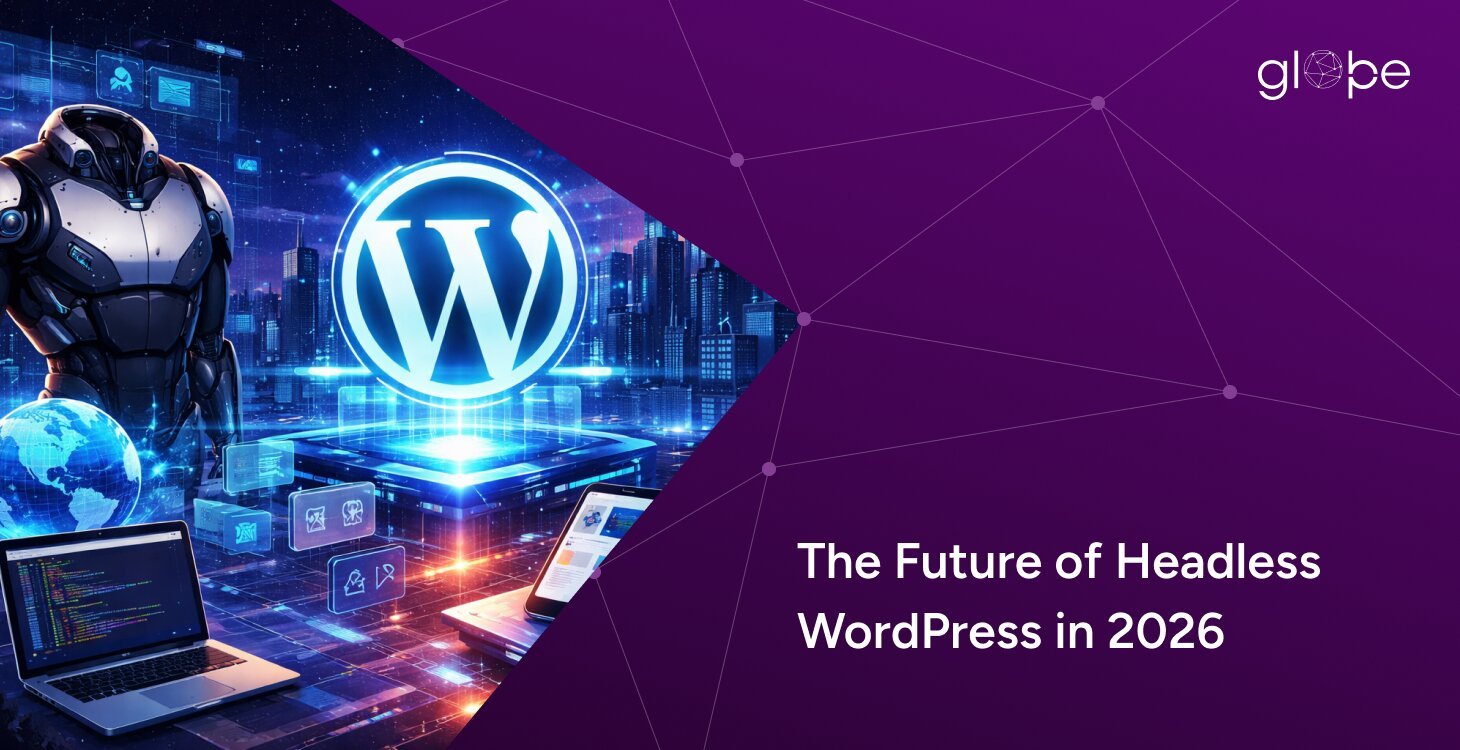
The way websites are built and delivered is evolving rapidly—and Headless WordPress is at the center of this transformation. As businesses demand faster, more flexible, and highly scalable digital experiences, traditional WordPress setups are no longer enough to meet modern expectations.
In 2026, the shift toward decoupled architectures and API-first ecosystems is accelerating. Companies are no longer limited by monolithic systems. Instead, they are adopting Headless WordPress development to gain full control over frontend experiences while still leveraging WordPress as a powerful content management system.
From startups to enterprise-level platforms, organizations are turning to headless solutions to improve performance, enhance user experience, and future-proof their digital presence. But what exactly makes Headless WordPress so powerful—and why is it becoming the go-to choice for modern web development?
In this blog, we’ll explore the future of Headless WordPress, its benefits, key trends, and how it can help your business stay ahead in an increasingly competitive digital landscape.
What is Headless WordPress?
At its core, Headless WordPress is a modern approach to building websites where the frontend (what users see) is separated from the backend (where content is managed).
In a traditional WordPress setup, everything—from content management to design and rendering—is tightly connected. However, in a headless architecture, WordPress acts purely as a content management system (CMS), while the frontend is built using modern frameworks like React, Next.js, or Vue.js.
Why Headless WordPress is Growing Rapidly
The rise of Headless WordPress isn’t just a trend—it’s a direct response to the changing demands of modern web development. As businesses prioritize speed, scalability, and seamless digital experiences, traditional CMS architectures are struggling to keep up.
Let’s explore the key reasons why Headless WordPress development is gaining massive traction in 2026.
Performance-Driven Web Experiences
Website speed is no longer optional—it directly impacts user experience, SEO rankings, and conversions.
With Headless WordPress, developers can use modern frontend frameworks like React or Next.js to build lightning-fast interfaces. These frameworks support techniques like:
- Server-side rendering (SSR)
- Static site generation (SSG)
- Optimized asset loading
This results in significantly faster load times compared to traditional WordPress themes.
Complete Flexibility for Developers
One of the biggest limitations of traditional WordPress is its dependency on themes and PHP-based structures.
Headless WordPress removes these restrictions.
Developers can:
- Build custom frontends using modern JavaScript frameworks
- Design unique user experiences without theme limitations
- Integrate advanced animations and UI components
This flexibility allows businesses to create highly customized and brand-focused digital experiences.
Omnichannel Content Delivery
In 2026, users interact with brands across multiple platforms—not just websites.
Headless WordPress enables content delivery across:
- Websites
- Mobile apps
- Smart devices (IoT)
- Digital kiosks
- Progressive Web Apps (PWAs)
Since content is delivered via APIs, it can be reused anywhere.
Scalability for Growing Businesses
As your business grows, your website needs to handle:
- Increased traffic
- More content
- Complex integrations
Headless architecture makes scaling easier because the frontend and backend operate independently.
You can:
- Scale frontend performance separately
- Optimize backend content management
- Integrate with third-party services seamlessly
This makes Headless WordPress a future-proof solution for startups and enterprises alike.
Improved Security Architecture
Security is a major concern for any website, especially those handling sensitive data.
In a headless setup:
- The frontend is decoupled from WordPress
- Direct access to the WordPress backend is minimized
- Attack surfaces are reduced
This makes it harder for attackers to exploit common WordPress vulnerabilities.
Seamless Integration with Modern Tech Stack
Headless WordPress fits perfectly into today’s development ecosystem.
It integrates easily with:
- APIs and microservices
- AI-powered tools
- Third-party platforms (CRM, analytics, eCommerce)
This allows businesses to build powerful, data-driven applications beyond traditional websites.
Rising Adoption of Jamstack Architecture
The growing popularity of Jamstack (JavaScript, APIs, Markup) is another major driver.
Headless WordPress plays a key role in Jamstack by acting as the content source while modern frontend frameworks handle the presentation layer.
Benefits include:
- Better performance
- Higher security
- Easier deployment workflows
Key Trends Shaping Headless WordPress in 2026
As Headless WordPress continues to evolve, several emerging technologies and development practices are shaping its future. These trends are not just influencing how websites are built—but also how businesses deliver digital experiences at scale.
Let’s explore the most important trends driving Headless WordPress development in 2026.
Rapid Adoption of API-First Architecture
Modern applications are increasingly built using an API-first approach, where every functionality is exposed through APIs.
In Headless WordPress:
Content is delivered via APIs like the WordPress REST API or GraphQL
Frontend and backend communicate seamlessly
Developers can integrate multiple services effortlessly
AI-Powered Content and Personalization
Artificial Intelligence is transforming how content is created, managed, and delivered.
In 2026, Headless WordPress is being combined with AI to:
- Deliver personalized content experiences
- Automate content recommendations
- Optimize user journeys in real time
Edge Computing for Ultra-Fast Performance
Speed is everything—and edge computing is taking performance to the next level.
Instead of loading content from a central server, content is delivered from servers closer to the user’s location.
With Headless WordPress:
- Frontend apps can be deployed on edge networks
- APIs deliver content quickly across regions
- Latency is significantly reduced
Growing Popularity of GraphQL Over REST
While the WordPress REST API is still widely used, GraphQL is gaining strong momentum.
Why developers prefer GraphQL:
- Fetch only the data you need
- Reduce over-fetching and under-fetching
- Improve performance and efficiency
This is especially useful for complex applications where multiple data sources are involved.
Rise of Modern Frontend Frameworks
Frameworks like React, Next.js, Vue.js, and Nuxt.js are becoming the standard for building headless frontends.
These frameworks offer:
Better performance optimization
Component-based architecture
Enhanced developer experience
Omnichannel and Multi-Platform Experiences
Businesses are no longer building just websites—they are building digital ecosystems.
Headless WordPress enables content distribution across:
- Websites
- Mobile applications
- Smart TVs and wearables
- Voice assistants
Enhanced Focus on Security and Compliance
With increasing cyber threats and data regulations, security is becoming a top priority.
Headless architecture supports:
- Reduced exposure of the backend
- Better control over data flow
- Integration with advanced security tools
This makes it a preferred choice for industries like finance, healthcare, and enterprise platforms.
Composable Architecture and Microservices
In 2026, businesses are moving toward composable architectures, where applications are built using smaller, independent services.
Headless WordPress fits perfectly into this model by acting as:
- A content hub
- A part of a larger microservices ecosystem
Improved SEO Strategies for Headless Websites
Earlier, SEO was considered a challenge in headless setups—but that’s changing fast.
Modern solutions now support:
- Server-side rendering (SSR) for better indexing
- Static site generation (SSG) for speed
- Advanced metadata handling
Headless WordPress vs Traditional WordPress
When deciding between Headless WordPress and traditional WordPress, businesses often struggle to understand which approach better suits their needs. While both use WordPress as a core platform, the way they deliver content and handle frontend experiences is fundamentally different.
Let’s break it down in a simple, non-technical way.
Key Difference at a Glance
Traditional WordPress:
A monolithic system where the backend (content management) and frontend (design + rendering) are tightly connected.
Headless WordPress:
A decoupled system where WordPress manages content, and a separate frontend (built with modern frameworks) handles the user interface.
Comparison Table
| Feature | Traditional WordPress | Headless WordPress |
|---|---|---|
| Architecture | Monolithic | Decoupled (API-first) |
| Frontend | Themes (PHP-based) | React, Next.js, Vue |
| Performance | Moderate | High (optimized frontend) |
| Flexibility | Limited to themes/plugins | Fully customizable |
| Scalability | Limited | Highly scalable |
| Development Complexity | Easy | Moderate to advanced |
| SEO | Built-in | Requires proper setup |
| Security | Standard | More secure (decoupled) |
| Omnichannel Support | Limited | Excellent |
Performance Comparison
Traditional WordPress relies heavily on themes and plugins, which can slow down performance if not optimized properly.
On the other hand, Headless WordPress development uses modern frontend technologies that:
- Load content faster
- Optimize assets efficiently
- Deliver better Core Web Vitals
Flexibility & Customization
With traditional WordPress:
- You are often limited by theme capabilities
- Customization can become complex and restrictive
With Headless WordPress:
- You can build completely custom UI/UX
- No dependency on WordPress themes
- Freedom to use any frontend technology
Scalability & Future Readiness
As your business grows, your website must handle increasing demands.
- Traditional WordPress can struggle with high traffic and complex features
- Headless WordPress allows independent scaling of frontend and backend
Security Considerations
Traditional WordPress sites are more exposed because:
- Frontend and backend are connected
- Common vulnerabilities can be exploited
Headless WordPress improves security by:
- Separating the frontend from the backend
- Reducing direct access to the WordPress admin
SEO Capabilities
Traditional WordPress is known for its strong built-in SEO features.
Headless WordPress, however, requires:
- Proper implementation of SSR or SSG
- Manual handling of metadata
- Technical SEO expertise
Benefits of Headless WordPress for Businesses
Adopting Headless WordPress is not just a technical upgrade—it’s a strategic business decision. In 2026, companies are increasingly shifting toward headless architecture to deliver faster, smarter, and more scalable digital experiences.
Let’s explore the key benefits of Headless WordPress development and how it directly impacts business growth.
Lightning-Fast Performance
Speed plays a crucial role in user experience and search engine rankings.
With Headless WordPress:
- Frontends are built using high-performance frameworks
- Pages load faster with SSR and static generation
- Optimized delivery improves Core Web Vitals
Superior User Experience (UX)
Modern users expect seamless, interactive, and visually appealing experiences.
Headless WordPress allows:
- Fully customized UI/UX design
- Smooth animations and transitions
- App-like experiences with modern frameworks
Omnichannel Content Delivery
Today’s users interact with brands across multiple platforms—not just websites.
With Headless WordPress, you can deliver content across:
- Websites
- Mobile apps
- Progressive Web Apps (PWAs)
- IoT devices
Scalability for Growing Businesses
As your business expands, your digital platform must scale effortlessly.
Headless architecture allows:
- Independent scaling of frontend and backend
- Efficient handling of high traffic
- Easy addition of new features and integrations
Enhanced Security
Security is a major concern for modern businesses.
With Headless WordPress:
- The backend is separated from the frontend
- Direct access to WordPress is minimized
- Attack surfaces are reduced
Flexibility & Custom Development
Traditional WordPress often limits customization due to theme constraints.
Headless WordPress provides:
Freedom to use any frontend technology
Custom workflows and integrations
Tailored solutions for specific business needs
Seamless Integration with Modern Tools
Headless WordPress easily integrates with:
- CRM systems
- Marketing automation tools
- Analytics platforms
- eCommerce solutions
Long-Term Cost Efficiency
While the initial investment in Headless WordPress development may be higher, it offers better ROI in the long run.
- Reduced maintenance issues
- Easier scalability
- Fewer limitations as your business grows
Future-Proof Technology Stack
Technology evolves quickly—and businesses need to stay ahead.
Headless WordPress ensures:
- Compatibility with modern frameworks
- Easy adoption of new technologies
- Adaptability to changing digital trends
Final Thoughts: The Future is Headless
As we move deeper into 2026, it’s clear that Headless WordPress is no longer just a trend but a fundamental shift in how modern websites are built and experienced. Businesses today demand more than just a functional website—they need speed, scalability, flexibility, and seamless user experiences across multiple platforms. Headless WordPress delivers exactly that by decoupling the frontend from the backend, allowing organizations to innovate freely while still leveraging the reliability of WordPress as a powerful content management system.
Adopting Headless WordPress development gives businesses a strong competitive advantage. It enables faster load times, better user engagement, improved scalability, and the ability to integrate with modern technologies effortlessly. As digital ecosystems continue to expand, companies that embrace headless architecture early will be better positioned to deliver high-performance experiences and stay ahead of the competition.
If your current website is struggling with performance limitations, lack of flexibility, or scalability challenges, now is the right time to consider transitioning to a headless approach. Investing in Headless WordPress development services is not just about upgrading your website—it’s about future-proofing your digital presence and unlocking new growth opportunities in an increasingly competitive market.