Website Design & Development
 Web Application Development
 Branding & Logo Design
 Care Plans & Maintenance




 WordPress
 Laravel
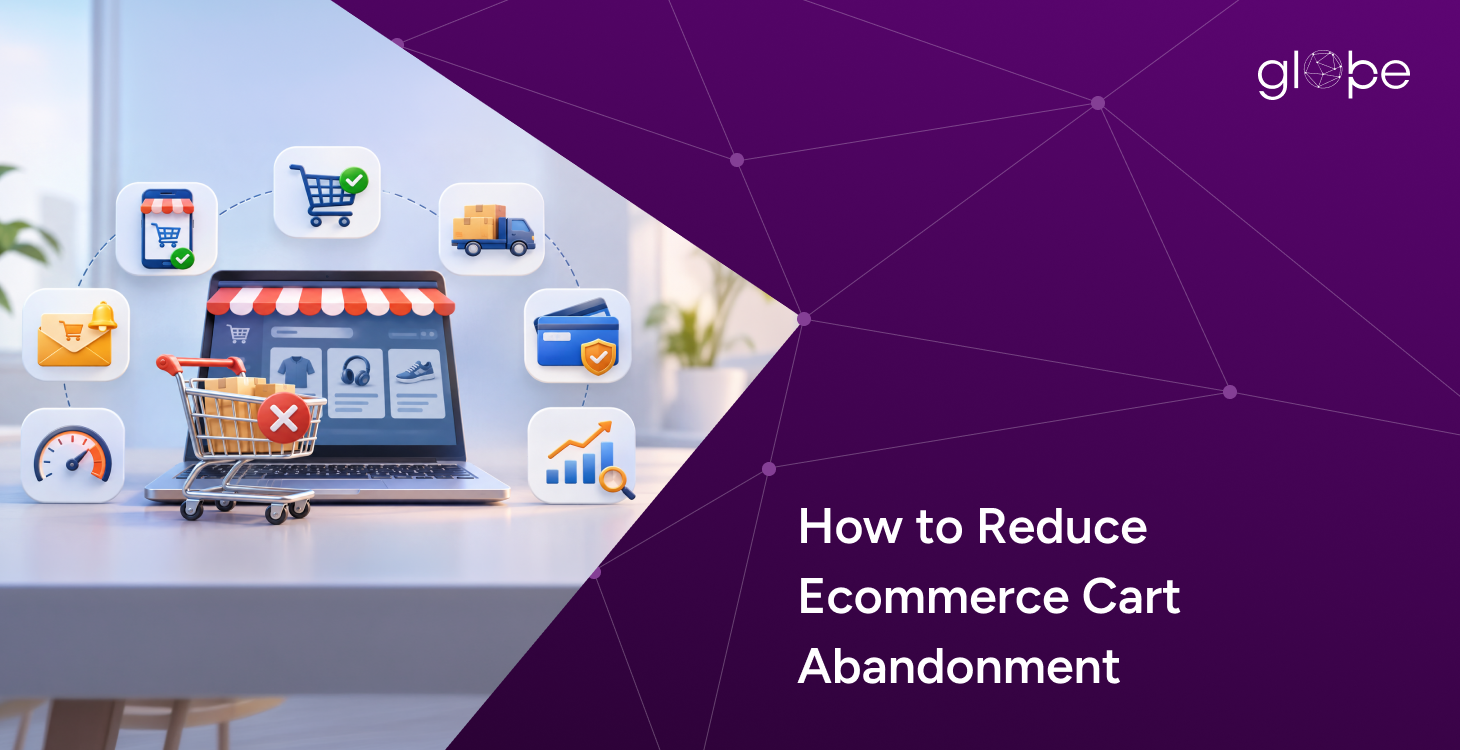
Reducing ecommerce cart abandonment starts with removing unnecessary checkout friction, communicating costs clearly, ensuring reliable payments, and improving mobile usability. Cart recovery campaigns can complement these preventive measures, while analytics helps identify problems and evaluate the results of changes.
Glopbe helps businesses develop and optimise ecommerce websites with a focus on usability, performance, and conversion-oriented design.
How to Reduce Ecommerce Cart Abandonment?
1. Simplify the Ecommerce Checkout Process
A complicated checkout process can discourage customers who are ready to purchase. Requiring account registration, collecting unnecessary information, or presenting too many steps increases friction and creates opportunities for shoppers to leave. Ecommerce websites should offer guest checkout, minimise form fields, enable address autofill, and provide clear progress indicators.
Helpful validation messages and the preservation of entered information can also prevent frustration when customers make mistakes. Businesses should review the entire journey from the shopping cart to order confirmation to identify unnecessary steps. A streamlined checkout experience reduces effort and helps customers complete transactions more efficiently.
2. Display Transparent Pricing and Delivery Information
Unexpected charges can change a customer's purchase decision, particularly when shipping fees, taxes, or handling costs appear late in checkout. Businesses should communicate applicable charges as early as possible and provide realistic delivery estimates before customers commit to an order. A shipping calculator and clearly explained free-shipping thresholds can help shoppers understand the total cost.
Ecommerce stores should also make return policies, delivery restrictions, and applicable fees easy to find. Transparent pricing establishes accurate expectations and reduces unpleasant surprises during checkout. If commercially viable, free shipping above a minimum order value can encourage larger purchases without requiring businesses to absorb every delivery cost.
3. Offer Reliable Payment Options and Build Customer Trust
Customers may abandon checkout when their preferred payment method is unavailable or a transaction fails unexpectedly. Businesses should offer payment options appropriate to their target market, such as credit and debit cards, digital wallets, online banking, or cash on delivery where suitable. Reliable payment gateway integration is equally important because technical errors, confusing authentication steps, and unnecessary redirects can interrupt purchases.
Secure payment processing, HTTPS protection, clear privacy information, and accessible customer support help establish confidence. Ecommerce teams should regularly test payment methods across devices and browsers and monitor transaction failures. Distinguishing between unavailable payment options and technical payment errors helps businesses identify the right corrective action.
4. Optimise Mobile Usability and Website Performance
A responsive ecommerce website should make browsing, adding products to the cart, and completing checkout straightforward on smartphones and tablets. Small buttons, difficult forms, slow-loading pages, intrusive pop-ups, and poorly organised layouts can prevent customers from finishing their purchases. Businesses should optimise product images, reduce unnecessary scripts, improve navigation, and ensure that form fields and payment controls are easy to use on smaller screens. They should also test the complete purchase journey across relevant devices and browsers. Analytics can reveal whether abandonment is disproportionately high on mobile compared with desktop. Addressing these device-specific issues helps remove usability barriers and creates a more consistent shopping experience.
5. Recover Abandoned Carts with Relevant Follow-Ups
Not every abandoned cart results from a website problem. Customers may become distracted, need more time to compare products, or postpone a purchase. Abandoned-cart emails can remind eligible shoppers about their selected products and provide a direct link to resume checkout. Effective messages should include relevant product information, a clear call to action, and helpful details about delivery, returns, or customer support. Businesses can also use appropriate, consent-based remarketing to reconnect with eligible shoppers.
Discounts should be tested rather than offered automatically, as unnecessary incentives can reduce profit margins. Measuring recovered purchases and incremental revenue helps determine whether these campaigns contribute to additional sales.
6. Measure Cart Abandonment and Optimise Checkout Performance
Reducing ecommerce cart abandonment requires consistent measurement rather than relying on assumptions. A commonly used simplified formula is:
Cart Abandonment Rate = [(Carts Created − Completed Purchases) ÷ Carts Created] × 100
For example, if a store records 1,000 comparable carts and 300 completed purchases during the same measurement period, its calculated abandonment rate is 70%. This example assumes that cart creation and completed purchases use consistent definitions and that the purchases correspond to the carts being measured. Analytics platforms may use different event definitions, so businesses should establish a consistent measurement method before comparing results.
Checkout funnel analysis helps identify where customers leave, including the transition from cart to checkout, payment, and order confirmation. Businesses should investigate sudden drop-offs, payment failures, device-specific differences, and form errors before deciding which changes to implement. Testing one meaningful improvement at a time, where practical, helps establish whether a change improves checkout completion. Teams should also monitor related outcomes, including average order value, refunds, and profitability, rather than judging success by abandonment rate alone. This evidence-based approach allows ecommerce businesses to prioritise improvements according to their actual impact.
Contact Glopbe to discuss how your ecommerce website can provide a smoother shopping experience and convert more visitors into customers.
Frequently Asked Questions
1. What Is Ecommerce Cart Abandonment?
Ecommerce cart abandonment occurs when shoppers add products to an online shopping cart but leave without completing their purchases. Common causes include unexpected costs, complicated checkout, payment issues, and concerns about trust or delivery.
2. What Is a Good Ecommerce Cart Abandonment Rate?
There is no single ideal abandonment rate for every ecommerce business. Results vary by industry, product category, device, and purchase complexity. Businesses should review relevant industry benchmarks while monitoring their own historical performance and checkout conversion trends.
3. How Can I Reduce Cart Abandonment on My Ecommerce Website?
Simplify checkout, offer guest purchasing, display shipping costs upfront, provide relevant payment methods, improve mobile usability, and resolve technical errors. Use checkout funnel analytics and testing to identify which improvements have the greatest impact on completed purchases.
4. Do Abandoned-Cart Emails Help Recover Lost Sales?
Yes. Abandoned-cart emails can encourage eligible shoppers to return by reminding them about selected products and providing a convenient checkout link. Their effectiveness depends on timing, relevance, customer consent, and the overall purchasing experience.
5. How Do You Calculate the Ecommerce Cart Abandonment Rate?
A commonly used method subtracts completed purchases from carts created, divides the result by carts created, and multiplies by 100. The calculation requires consistent definitions and a comparable measurement period. Businesses should document their analytics methodology before evaluating trends.
Cleanup order is easy to get wrong.
Get expert help from Globpe.
Your website should make it clear who you are, what you offer and what visitors should do next. Whether you are launching a new digital presence or improving an existing website, start with the goals, customers and opportunities that matter most to your business.